

Got a Huge Hospital Bill? Don’t Panic and Don’t Pay Yet. Do These 9 Things First.

Updated: October 22, 2026
You open the envelope at the hospital cashier’s window, or check the bill on your phone, and see a number that makes your stomach drop. Maybe it has six digits. Maybe it is more than you earn in a year.
It is natural to feel afraid, frustrated, or overwhelmed. Medical emergencies rarely come at a good time, and the bills that follow can put an entire family’s finances at risk.
But before you panic, remember this: the amount on your initial hospital bill may not be the final amount you have to pay.
PhilHealth benefits, government medical assistance, discounts, and hospital payment arrangements may help reduce the amount you owe. The key is knowing where to ask, what documents to prepare, and which options are available to you.
If you or a family member is facing a large hospital bill, here are nine practical steps to take.
1. Ask for an Itemized Bill and Check Every Charge
Your first step is to understand exactly what the hospital is charging you for.
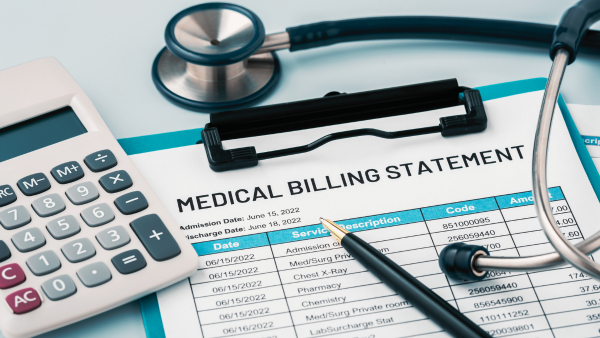
Ask the billing department for an itemized statement of account. This should help you review the different charges, including room accommodation, medicines, laboratory tests, medical supplies, procedures, and professional fees.
A single total tells you very little. An itemized statement gives you something you can check. Review the charges carefully. Look for possible duplicate entries, medicines or supplies you do not recognize, and services that need further explanation.
For example, if you see the same laboratory test listed twice, ask the billing department to clarify whether both charges are correct. There may be a legitimate reason for repeated testing, but you should be able to ask why.
You can also request an explanation of charges that seem unusually high. Do not assume every unfamiliar charge is an error. Instead, ask the billing staff or medical team to explain it and correct any verified mistakes.
If the hospital cannot immediately provide a final statement, ask for an updated provisional bill and an estimate of the remaining charges.
Practical tip: Keep copies of every statement of account, receipt, prescription, medical certificate, and document related to the hospitalization. These records may also be required when applying for financial assistance.

2. Check Your PhilHealth Benefits and Ask About Zero Balance Billing
PhilHealth should be one of your first stops when reviewing a hospital bill. For many illnesses and procedures, PhilHealth provides benefits through case rates or specific benefit packages. The applicable amount depends on the diagnosis, treatment, and package rules.
Ask the hospital’s PhilHealth desk or billing department:
- What PhilHealth benefit applies to this hospitalization?
- Has the applicable benefit already been deducted from the bill?
- Are there additional benefit packages that may apply?
- What remaining amount is attributable to charges not covered by the applicable benefit?
Do not assume that you are automatically disqualified because some contributions are unpaid or missing from your records. Under the Universal Health Care Act, failure to pay premiums does not by itself prevent access to PhilHealth program benefits, although contribution obligations may still apply to direct contributors.
What Is Zero Balance Billing?
Zero Balance Billing is a separate government policy designed to protect eligible patients from out-of-pocket hospital expenses.
Under the policy, eligible patients receiving care in basic or ward accommodation at DOH hospitals can receive covered services without having to pay the remaining balance for those services, subject to the program’s applicable rules.
However, do not assume that every government hospital, every type of room, or every patient automatically qualifies. Private rooms and pay wards may be treated differently, and the rules governing eligibility and covered expenses matter.
Ask the hospital’s social service office or billing department whether your admission qualifies under the current Zero Balance Billing policy. For official health coverage information, visit PhilHealth and the Department of Health.
Note: Ordinary PhilHealth benefits may reduce your bill without eliminating it. Zero Balance Billing may provide broader protection for eligible patients in covered accommodations. Ask which rules apply to your specific case.

3. Visit the Hospital’s Social Service Office or Malasakit Center
If the remaining bill is still beyond your means, do not assume you have run out of options.
Ask for the hospital’s Medical Social Service Office, social welfare office, or medical social worker. These professionals can assess your circumstances and explain what assistance may be available.
If you are in a participating government hospital, ask whether it has a Malasakit Center. These were established to help patients access assistance from participating government agencies, including the Department of Health (DOH), PhilHealth, the Philippine Charity Sweepstakes Office (PCSO), and the Department of Social Welfare and Development (DSWD).
Instead of traveling separately to several offices, you may be able to start the process through the center. The staff can explain which programs may apply and what requirements you must meet.
Prepare Your Documents
Requirements vary by program and hospital. Bring the original documents and photocopies when possible. It is useful to prepare the following:
- Valid identification for the patient and, when required, the representative.
- Medical abstract or medical certificate signed by the attending physician.
- Updated hospital bill or statement of account.
- PhilHealth information and applicable benefit records.
- Proof of financial circumstances, such as a certificate of indigency or other documents requested by the social worker.
- Authorization documents if someone is applying on behalf of the patient and these are required.
Before making a trip, call the office or ask the hospital social worker for its current checklist. Requirements can differ depending on the type and amount of assistance requested.
Practical tip: Ask about financial assistance while the patient is still admitted, if circumstances allow. Some programs require assessment and coordination with the hospital, and starting early may give you more time to complete the process.

4. Apply for Government Medical Assistance
Several government agencies may provide medical assistance to qualified patients. The amount and form of assistance depend on the program, the applicant’s circumstances, the supporting documents, and the availability of funds. Here are the main options to explore.
Department of Health: MAIFIP
The DOH administers the Medical Assistance to Indigent and Financially Incapacitated Patients (MAIFIP) program. It is intended to help eligible patients who cannot afford necessary medical expenses. Depending on the applicable program rules, assistance may cover eligible hospital expenses, medicines, procedures, or other medical needs.
Ask the hospital social worker whether MAIFIP assistance is available at that facility and how to apply. Official information is available through the Department of Health.
Department of Social Welfare and Development: AICS
The DSWD’s Assistance to Individuals in Crisis Situations (AICS) program provides assistance to eligible individuals and families experiencing a crisis, including certain medical emergencies.
Medical assistance may be provided through a guarantee letter addressed to an eligible service provider, rather than cash handed directly to the applicant.
A guarantee letter is not automatic. The DSWD assesses the request and determines whether assistance can be granted. You should also confirm whether the hospital or other service provider accepts the applicable guarantee letter.
Check the DSWD website for current announcements and application requirements.

Philippine Charity Sweepstakes Office: Medical Assistance
The PCSO offers a Medical Assistance Program that may help qualified patients with eligible hospital bills, medicines, and treatments through its established procedures.
Requirements can include a medical abstract or certificate, a hospital bill, identification documents, and other records depending on the type of request. Check the PCSO website for the latest requirements and application process.
Your Local Government
Your city, municipality, or provincial government may also have medical assistance programs. Ask your local social welfare office, city hall, or provincial capitol about available assistance. Your local officials may be able to explain where applications are accepted and what documents are required.
Keep in mind that these programs are not interchangeable, and approval from one agency does not guarantee approval from another.
You may be able to explore more than one source of assistance, but disclose any assistance already approved or received when asked. Some programs coordinate benefits or deduct other sources of support when determining the amount they can provide.
The goal is to identify the programs for which you qualify, not to assume that every agency will pay the same bill.

5. Claim Applicable Senior Citizen and PWD Benefits
If the patient is a qualified senior citizen or person with disability (PWD), ask the billing department to review the applicable statutory discounts and exemptions.
Eligible senior citizens and PWDs generally receive a 20% discount and VAT exemption, where applicable, on qualifying medicines and medical services, subject to the relevant laws and implementing rules.
For medical services, qualifying benefits may include covered diagnostic and laboratory tests and professional fees. The precise application depends on the type of expense and applicable regulations.
Do not assume that the discount automatically applies to every item on the hospital bill. Present the appropriate identification and supporting documents, then ask the billing staff to explain which charges qualify.
You can review the relevant laws through the following official legal resources:
If the patient qualifies, ask the hospital to show how the discount and applicable tax exemption were calculated. This makes it easier to identify any benefit that may have been overlooked.

6. Check Your HMO, Health Insurance, and Employee Benefits
If you have an HMO or private health insurance policy, contact the provider as soon as possible. Do not wait until after discharge to discover that a requirement or deadline was missed.
Ask the provider:
- Is this illness, procedure, or hospitalization covered?
- What are the applicable limits and exclusions?
- Does the plan cover professional fees, room charges, medicines, and diagnostic tests?
- Is a letter of authorization or guarantee letter required?
- Can any remaining expenses be reimbursed?
- What documents and deadlines apply?
If the patient is employed, check whether the company provides group medical insurance, hospitalization assistance, or other employee benefits. Some employers also provide emergency loans or financial assistance, depending on company policy.
If the patient is an SSS or GSIS member, check whether applicable sickness benefits are available. These benefits may help replace part of the income lost during a qualifying period of illness, subject to eligibility and filing requirements.
However, sickness benefits are not the same as direct payment of a hospital bill. They may help with the financial consequences of an illness rather than settle the medical expenses themselves.
The important thing is to identify all the benefits you may already have before borrowing money or using your savings.

7. Negotiate a Payment Arrangement With the Hospital
After checking PhilHealth benefits, discounts, insurance coverage, and available financial assistance, ask the billing department to prepare an updated statement showing the remaining balance.
If you cannot pay the amount in full, explain your situation and ask whether the hospital offers an installment arrangement, partial payment, or another payment option.
Do not assume every hospital has the same policy. Payment arrangements depend on the facility, its rules, and the circumstances of the case. Before agreeing to anything, ask for the terms in writing.
Make sure you understand:
- The amount that must be paid immediately.
- The remaining balance.
- The installment amount and due dates.
- Any interest, fees, or penalties.
- The consequences of missing a payment.
- Whether financial assistance can still be processed alongside the arrangement.
Offer an amount that your household can realistically afford. For example, if your family can consistently set aside ₱3,000 a month after covering food, housing, transportation, utilities, and other essential expenses, do not promise ₱8,000 just to secure an agreement.
A manageable arrangement is more useful than a promise that puts your family into another financial crisis. If you are considering borrowing money, compare the total cost before signing anything. Credit card interest and informal loans can make an already difficult situation worse.
Check legitimate, lower-cost borrowing options first, but remember that loans from SSS, GSIS, or Pag-IBIG have their own eligibility requirements and repayment obligations.
Do not borrow simply because the money is available. Borrow only after considering your ability to repay it.

8. Ask Your Family and Community for Help, and Protect Yourself From Scams
A serious illness can affect an entire family. Sometimes, even after exhausting available benefits and assistance programs, there is still a substantial balance to settle.
If you need additional help, consider reaching out to trusted relatives, friends, colleagues, your church community, or other organizations that support families in crisis.
You may also consider a reputable crowdfunding platform. If you organize a fundraiser, explain the situation honestly and clearly. State the amount needed, describe what the money will cover, and provide a way for donors to verify the request.
Protect the patient’s privacy. Share medical documents or personal information only when necessary, and obtain the patient’s consent when appropriate.
Keep a simple record of donations and expenses. If possible, use a transparent payment arrangement that allows funds to go directly to the hospital or authorized service provider.
Be Careful of Fake Medical Assistance Offers
Unfortunately, financial emergencies create opportunities for scammers. Be suspicious of anyone who promises guaranteed government assistance in exchange for an upfront processing fee, asks for your bank password or one-time PIN, or sends a suspicious link claiming to release medical aid.
Use the official websites and contact channels of PhilHealth, DOH, DSWD, PCSO, and your local government. If you are unsure whether a message or offer is legitimate, contact the agency directly or visit its office.
Never share your banking credentials or send money to an individual simply because they claim they can speed up your application. When you are desperate for help, it is especially important to verify every offer before trusting it.

9. Dispute Incorrect Charges and Plan for the Next Emergency
If you believe that a hospital charge is incorrect, or that an applicable benefit has not been applied, raise the issue through the proper channels. Start with the billing department. Explain the specific charge or benefit you want reviewed and provide supporting documents.
If the matter remains unresolved, ask the hospital’s patient relations office or administration for assistance. For concerns involving PhilHealth claims or hospital practices, contact the relevant agency and follow its official complaint procedure.
Keep copies of your bills, receipts, correspondence, and complaint reference numbers. A clear written record will help you explain the problem and follow up on the response.
After the Crisis, Rebuild Your Financial Safety Net
Once the immediate problem is under control, take some time to prepare for future medical expenses. Start with the basics:
- Check your PhilHealth membership. Review your records and resolve any contribution or membership issues that apply to you.
- Register with a YAKAP clinic. PhilHealth’s Yaman ng Kalusugan program provides access to covered primary care services through accredited clinics, including consultations and eligible preventive services. It is not a program for settling existing hospital bills. Visit PhilHealth YAKAP for details.
- Build an emergency fund. Start with a manageable amount, even a few hundred pesos a month. Increase it when your budget allows.
- Review your health protection. Consider whether an HMO, private health insurance, or employer-sponsored coverage fits your needs and budget. Understand the exclusions, limits, waiting periods, and renewal terms before purchasing a plan.
- Organize important documents. Keep your identification, PhilHealth information, insurance details, medical records, and emergency contacts in one secure place.
You may not be able to prevent every medical emergency. But you can make the financial consequences easier to manage by preparing before one happens.

Key Takeaways
A huge hospital bill can feel overwhelming, but you do not have to face it without a plan.
Start by asking for an itemized statement and checking the charges. Confirm your PhilHealth benefits and ask whether Zero Balance Billing applies. Visit the hospital’s social service office or Malasakit Center, then explore assistance from the DOH, DSWD, PCSO, and your local government.
Check applicable senior citizen or PWD benefits, review your HMO and insurance coverage, and negotiate a realistic payment arrangement if necessary. If you need additional help, approach trusted people and organizations, and be careful of scams.
Finally, keep records of every application, approval, payment, and conversation. Requirements and benefits can change, so confirm the current rules with the relevant hospital or government agency.
Most importantly, do not assume that the first bill you see is the only amount you can be charged, or that assistance is guaranteed. Ask questions, check your options, and take one step at a time.
You did not choose the illness or the financial burden that came with it. But you can approach the situation with a clearer plan, seek the help available to you, and protect your family from unnecessary financial strain.
This article is for general educational purposes only. Medical assistance programs, insurance coverage, discounts, and payment arrangements depend on applicable rules, eligibility, and provider policies. Contact the relevant hospital or government agency to confirm current requirements before making financial decisions.